

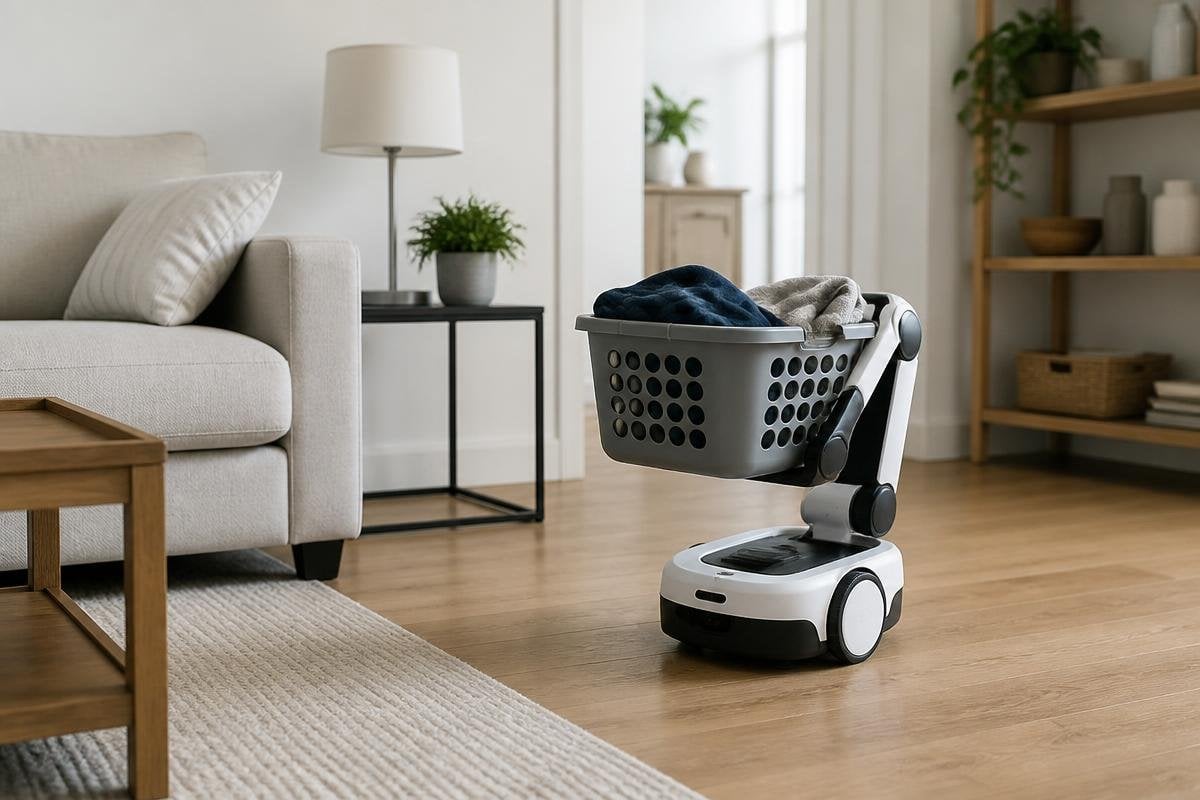
A cheap household robot won’t need to look human to change your day. If it can move items, watch a room, or handle one repeat task without help, it could earn a place in homes and small workplaces.
This article looks at where lower-cost robots may work first, what hardware they need, and which limits will keep them from becoming general helpers.
- Low-cost robots will likely start with fixed tasks in known spaces.
- Remote human help may cover jobs the robot cannot finish alone.
- Repairs, charging, and safe movement will shape the real cost.
The first useful robots will do one job
Building a robot becomes easier when its task stays narrow. A wheeled base can carry laundry between two rooms. A camera can check whether a door is open. A small arm can move objects from one marked spot to another.
These jobs reduce the number of things the robot must understand. It can work from a map, use a few fixed routes, and ask for help when an object sits outside its expected position. That makes a lower price more realistic than a machine expected to clean an entire home without supervision.
The same pattern may appear in small shops and offices. A robot could carry stock from a storage room, move bins across a workshop, or check a closed area after hours. The task matters more than the shape of the machine.
Sensors decide what the robot can handle
A low-cost robot still needs enough information to move safely. Cameras can identify objects and people. LiDAR measures distance with laser pulses. Wheel encoders track how far the base has moved, though wheels can slip on smooth floors.
Those parts work together through software that builds a map and estimates the robot’s position. A gripper adds another problem: the robot must find an object, apply enough force, and release it without dropping or crushing it.
The cheapest design may use fewer sensors and a smaller arm. That can work in a kitchen with clear floors and known storage places. It becomes harder around stairs, pets, loose cables, glass, and objects that people leave in new places.
A low-cost home robot may still need a person to approve a new task or stop the arm near a child. Household robotics reports from Robot24.com can show where makers place that handoff before the next section looks at the human staying in control.
The human may stay in the loop
Many low-cost robots could depend on teleoperation. A person takes control through a remote link when the robot meets an unfamiliar object or loses its position. The robot handles routine movement, then sends the difficult case to a human operator.
That approach can lower the hardware and software cost, but it shifts part of the work to another place. A company selling robots for homes, shops, or care settings would need to plan for response time, privacy, and payment for that remote help.
This also changes how you judge the robot. Ask how often a person must step in, how long help takes, and what happens when the network connection fails. A low purchase price means little if the robot needs constant remote control.
Safety and upkeep set the real price
Any robot sharing space with people needs limits on speed, force, and movement. It should stop when a person enters its path and recover safely after a blocked wheel or failed task. Those features add sensors, software checks, and service work.
Battery charging creates another daily limit. When the robot returns to a dock, it can work without a cable, but the dock needs a clear place and the robot must find it reliably. Batteries also lose capacity over time, so replacement cost belongs in the buying decision.
Repairs matter just as much. A broken wheel, camera, motor, or gripper can stop the whole system. If parts are hard to buy, a low sale price may lead to a high ownership cost.
A practical buying check
Before you pay for a low-cost robot, check these points:
- Name the task: Write down one job it must finish without help.
- Map the space: Mark stairs, narrow doors, loose cables, pets, and people.
- Check control: Find out when a remote operator takes over.
- Price the service: Add charging parts, replacement batteries, repairs, and software fees.
- Set a safety limit: Confirm its speed, stopping method, and force limits near people.
That list separates a useful tool from a moving gadget. I’d buy a cheap robot for a narrow, repeatable job only when the service plan and failure response are clear.
The next step for everyday robotics is likely to be less dramatic than a general household worker: a machine that does one task every day, asks for help at the right time, and costs less to repair than the work it replaces.
